

Why Roof Valleys Are One of the Most Critical Parts of Any Roof in West Texas
Orbis Advisers
October 2, 2026
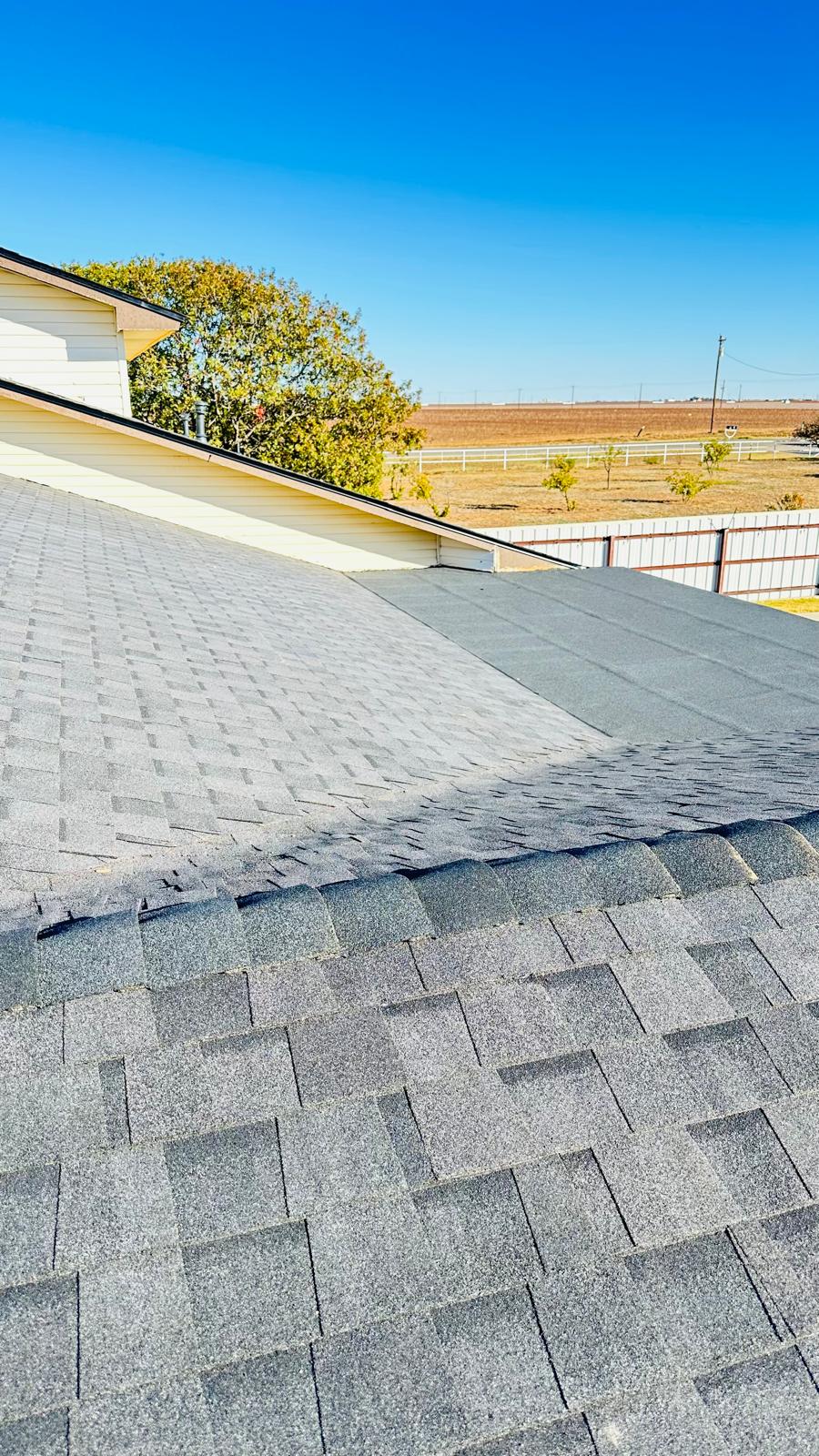
If you’ve ever stood back and looked at a roof with two or more slopes meeting at an angle, you’ve seen a roof valley. That V-shaped channel running down the intersection of two roof planes looks simple enough — but it is one of the hardest-working and most leak-prone areas on any roof in West Texas. Understanding why roof valleys matter, how they fail, and what proper installation looks like can save Lubbock homeowners from some of the most expensive water damage a roof can produce.
At Gallegos Roofing LLC, every valley we install is built to handle the full force of what the West Texas sky can throw at it. Here’s why that attention to detail matters more than most homeowners realize.
What a Roof Valley Actually Does
A roof valley is the channel formed where two downward-sloping roof planes meet. Its job is straightforward but demanding: collect every drop of rainwater running off both roof surfaces and funnel it safely down to the gutters.
That means during any rain event, a valley handles significantly more water volume than the surrounding roof surface. On a typical Lubbock home with multiple roof planes, the valleys are receiving and redirecting water from hundreds of square feet of roof at once. When a West Texas storm drops an inch of rain in under an hour — which happens regularly during spring and summer — the volume moving through a valley is substantial.
Because of this concentrated water flow, valleys experience more wear, more stress on sealants, and more exposure to debris accumulation than any other part of the roof. They are the first place a poorly installed or aging roof will show its weakness.
Why West Texas Makes Valleys Even More Demanding
Lubbock’s climate creates a specific set of conditions that put extra stress on roof valleys compared to milder parts of the country.
Intense, fast-moving storms are the primary challenge. West Texas doesn’t get a lot of annual rainfall, but when it does rain, it often comes hard and fast. Thunderstorms, hail events, and heavy downpours drop large amounts of water in short windows — exactly the conditions that expose any weakness in a valley’s construction or flashing. A valley that might hold up fine in a region with steady, light rainfall can fail quickly under the pressure of a West Texas cloudburst.
UV degradation compounds the problem. The combination of intense sun, high heat, and low humidity causes sealants and underlayment at valley joints to dry out and crack faster than in more temperate climates. A valley that was properly sealed at installation may begin to lose that seal in five to seven years without maintenance — much sooner than the shingles around it would otherwise show wear.
Wind-driven rain adds another layer of exposure. High winds push water sideways and upward, forcing it under shingles and into seams that would stay dry under calm conditions. Valleys are particularly vulnerable to wind intrusion because they represent a physical break in the roof surface where two planes meet.
The Two Types of Roof Valleys — and Which Performs Better Here
There are two primary methods for finishing a roof valley, and they are not equal in performance — especially in a climate like Lubbock’s.
An open valley leaves a strip of metal flashing exposed in the center of the channel. The shingles on each side are cut back to leave a visible metal channel, typically three to four inches wide at the top and widening toward the bottom to accommodate increasing water volume. Open valleys handle high water volume efficiently, resist debris buildup better than closed valleys, and are easier to inspect and maintain. For West Texas homes that deal with intense rain events and hail, open valleys are generally the stronger choice because the exposed metal surface gives water a direct, unobstructed path to the gutters.
A closed or woven valley runs shingles from each side of the valley across the intersection, layered over each other. Woven valleys can look cleaner from the ground, but they trap more debris and are harder to inspect for damage. They also create more seams where water can potentially find its way through — and in a climate with wind-driven rain and thermal cycling as extreme as Lubbock’s, those seams are under more stress than in moderate climates.
A qualified roofing contractor will evaluate the pitch, configuration, and typical weather exposure of each valley on your roof and recommend the method best suited to that specific situation.
How Valleys Fail — and What the Warning Signs Look Like
Most valley failures follow one of a few predictable patterns, and catching them early makes the difference between a minor repair and a major interior water damage event.
Flashing deterioration is the most common cause of valley leaks. The metal flashing in an open valley is exposed to everything the sky delivers — UV rays, hail impacts, thermal expansion and contraction, and direct water flow. Over time, flashing can corrode, develop small cracks, or lift at the edges where it was sealed to the surrounding shingles. Once water finds a gap in the flashing, it runs directly onto the roof deck and into the attic.
Debris accumulation is a problem unique to valleys because of their shape. Leaves, twigs, granules shed from aging shingles, and blown dirt collect in the channel and slow water flow. Standing debris holds moisture against the flashing and surrounding shingles, accelerating deterioration at exactly the point the roof can least afford it. In areas with mature trees or high wind, valley debris can build up in a single season.
Improper installation creates problems from day one. A valley that was not flashed correctly, where shingles were cut too close to the center channel, or where the flashing was nailed through its face rather than at the edges, is already compromised before the first storm hits. These installation errors may not produce a visible leak immediately, but they create vulnerabilities that West Texas weather will eventually find.
From the ground, signs of valley trouble include dark staining along the valley line, shingles that appear lifted or curled near the valley edges, visible gaps in the flashing, or granule buildup in the gutters directly below a valley. Inside the attic, look for water staining or soft spots on the deck directly beneath valley lines.
What Proper Valley Installation Looks Like
A correctly installed valley is built in layers, each one designed to provide redundant protection in case an outer layer is compromised.
Ice and water shield goes down first, directly on the roof deck beneath the valley. This self-adhering membrane creates a watertight seal against the deck surface and provides a backup barrier even if the flashing above it is ever breached. In West Texas, where wind-driven rain can push water horizontally under flashing, this underlayment layer is not optional — it is essential.
Valley flashing is installed over the underlayment, centered on the valley line and extending at least eight inches up each side. The flashing is secured at its edges, not through its face, so that the metal can expand and contract with temperature changes without breaking the seal or lifting the fasteners through the surface.
Shingles are then cut, layered, and sealed to the flashing edges according to the valley type being used. In an open valley, the cut edge of each shingle is sealed with roofing cement along its underside to prevent wind from lifting the edge and directing water underneath. The center channel is left clear to allow maximum water flow.
Every component of this system is designed to work together. Cutting corners on any one layer — skipping the ice and water shield, using thin or undersized flashing, or failing to seal shingle edges — creates a point of failure that the rest of the system cannot fully compensate for.
Protect Your Lubbock Home With Valleys Built to Last
Roof valleys are not an area where good enough is ever good enough — especially in a climate that delivers the kind of storms West Texas produces. Whether you’re installing a new roof, replacing an aging one, or investigating a leak that keeps coming back, the valleys deserve the same attention as every other part of your roofing system.
At Gallegos Roofing LLC, we’ve been installing and repairing roofs across Lubbock, TX and the surrounding 40-mile area for over 30 years. We know what West Texas weather demands, and we build every valley — and every roof — to meet those demands from the first storm to the last.

Have Any Question?
We are ready to offer you Shingles Roofing, installation and roof repair services with our experience of more than 30 years.
Do you want a customized roofing? Contact with us
Need reliable roofing services? Call us now at (806) 781-8384 and protect your home with Gallegos Roofing LLC! Our expert team is ready to provide you with exceptional roofing solutions – don’t wait any longer, secure your peace of mind today!